The roadmap is longer than it was a quarter ago, customers are asking for things you can't ship, and the freelancer who built version one has moved on. Hiring a developer feels like the obvious next step. Often it is. Sometimes it is the most expensive way to solve a problem you could have solved for a fraction of the cost.
This guide is for founders and owners of small software companies, especially B2B SaaS, who are weighing their first developer hire, or their next one. It covers how to hire well, what it really costs, and the two questions to answer before you start.
In this article
1.
2.
3.
4.
5.
6.
7.
8.
9.
10.
The Short Answer
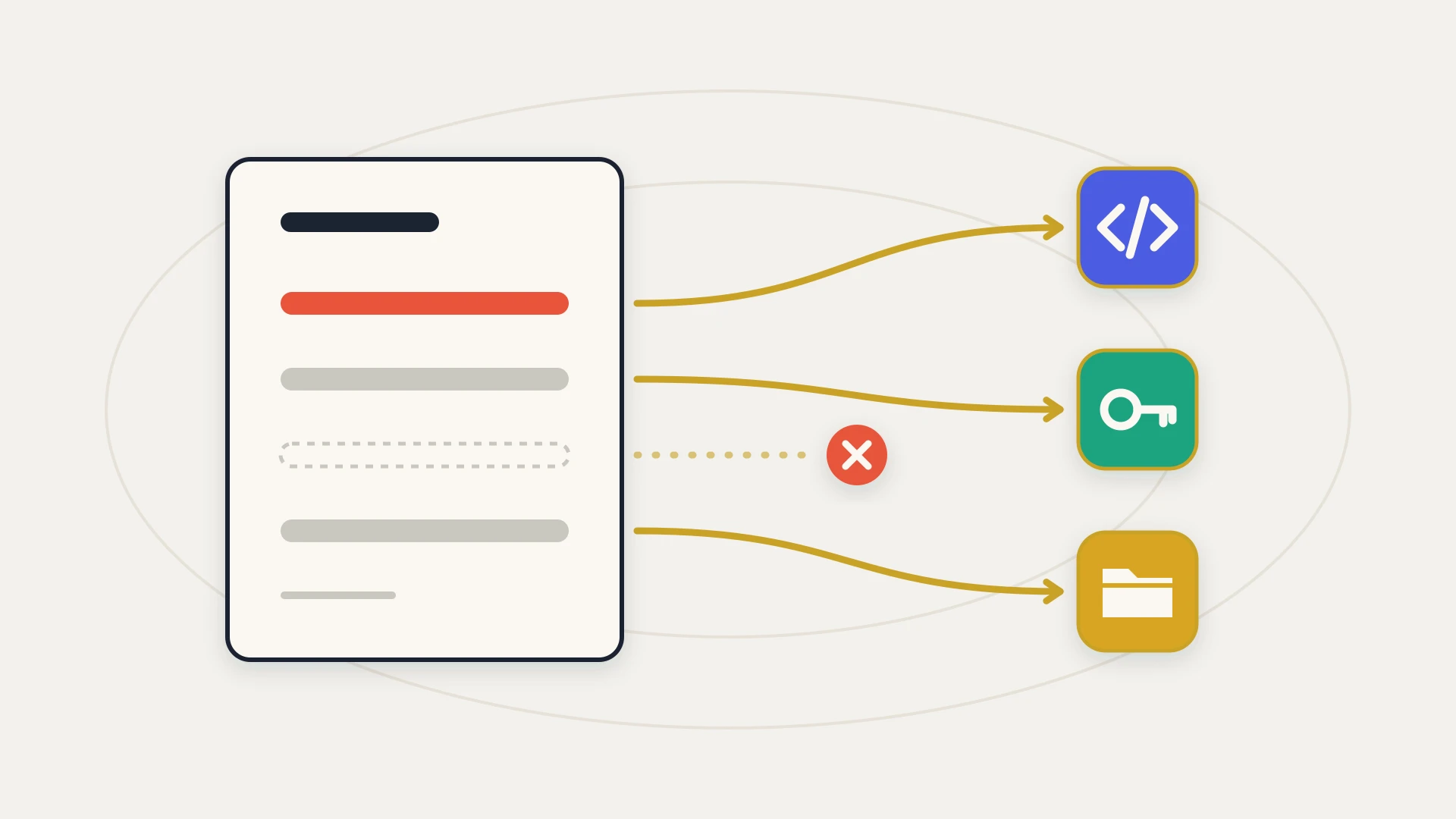
- Hire when you pass two tests: there is a full-time job's worth of work for the foreseeable future, and someone can direct and judge it.
- Make your first developer senior. Nobody above them will catch their mistakes.
- Budget for the whole cost, not the salary. Taxes, benefits and recruiting add a large share on top.
- Interview with structure and a short paid work sample, even if you aren't technical.
- Own everything from day one: repository, accounts and intellectual property.
- If you fail either test, use an alternative until you pass: a freelancer, an agency or a development subscription.
Before You Hire: Two Tests
Most hiring advice starts with where to find candidates. Start a step earlier, because a good developer in the wrong situation will still fail.
The workload test. Is there a full-time job's worth of work, not just this month but for the next year? A product with a busy quarter ahead and an unclear year after it does not pass. A developer with half a job's worth of work either gets bored and leaves, or fills the time with work you did not need.
The management test. Who will set priorities, answer questions, review the work and decide whether it is good? If you are not technical and this is your first developer, the honest answer is often nobody. A developer without direction builds what they find interesting, and you will not know whether it is right until a customer tells you.
If you pass both, hire. If you fail either, you are not ready yet, and the cheaper move is to get the work done another way until you are. Our guide to outsourcing product development covers the options.
What a Developer Really Costs
The salary is the number everyone looks at, and it is only part of the bill.
Payroll taxes are the first layer. The IRS sets the employer's share at 6.2 percent for Social Security, on earnings up to $184,500 in 2026, and 1.45 percent for Medicare. Federal unemployment tax adds 6.0 percent of the first $7,000 of wages, usually 0.6 percent after the state credit, plus state unemployment tax.
Benefits are the bigger layer. In the Bureau of Labor Statistics' June 2026 survey of employer costs, benefits accounted for 30 percent of private employers' compensation costs, and that figure already includes the payroll taxes above. Apply that average share to the median developer's wage and the total comes to roughly $194,000 a year. That is our estimate, not a published figure, and health insurance, equity and location can move it a long way in either direction.
Recruiting comes on top. SHRM's 2025 benchmarking puts the average cost per hire at $5,475 for non-executive roles, and its 2026 report puts the median time to fill a non-executive position at 39 calendar days. Those cover all non-executive roles, not developers specifically, and senior developers are rarely the quick end of the range. The BLS projects employment of software developers, QA analysts and testers to grow 10 percent from 2025 to 2035, much faster than the average for all occupations, so the competition for good candidates is not getting easier.
Then there is the cost nobody invoices. A new developer needs weeks to learn your product before they are fully productive, and a bad hire costs those weeks again, plus the time to undo their work. None of that shows up in the offer letter.
Employee or Contractor
The label you put on the relationship does not decide it. The IRS looks at the facts, grouped into three categories: behavioral control, financial control and the type of relationship. Its general rule is that someone is an independent contractor if you have "the right to control or direct only the result of the work and not what will be done and how it will be done." The IRS also says there is no magic number of factors that settles it. If you set the hours, assign tasks and direct how the work is done, the person is likely an employee, whatever the contract says.
For ongoing product work that you direct day to day, an employee is usually the right shape. For a defined piece of work with a clear result, a contractor fits. Either way, the code needs to belong to your company in writing. Our guide to software development contracts explains why paying for code does not automatically make it yours, and which clauses fix that.
How to Hire a Software Developer
- 1
Write the role around the first 90 days
Not a list of technologies, but what this person should have shipped after three months. "Rebuild onboarding so new accounts reach their first report without a call" tells a candidate far more than "React, Node, Postgres", and it gives you something to judge them against.
- 2
Hire senior first
Your first developer makes the architecture decisions that everyone after them lives with, and there is nobody above them to catch mistakes. Hire for judgement and the ability to work without supervision. A junior hire makes sense once there is a senior developer to guide them.
- 3
Look in your network before job boards
Ask founders you know, your investors and your customers' engineering teams who they would hire. Referred candidates come with a reference built in. Then widen to job boards and developer communities, and to vetted talent networks if you need someone quickly.
- 4
Interview with structure
Ask every candidate the same questions in the same order and score the answers against what you decided in advance. A 2022 meta-analysis of hiring methods by Sackett, Zhang, Berry and Lievens, as summarized by the Society for Industrial and Organizational Psychology, found structured interviews had the highest average validity for predicting job performance, at .42, with job knowledge tests at .40 and work sample tests at .33. Structure is what makes interviews by non-technical founders fair and comparable.
- 5
Pay for a short, real work sample
A few hours on a real, small problem from your product, paid at a fair rate. You learn how they ask questions, how they handle an unclear spec and how they explain what they did. Unpaid take-home tests filter out the experienced candidates you most want, because they have other options.
- 6
Check references and code
Talk to someone who worked with them, not just someone who managed them. If you are not technical, pay a trusted developer for an hour to review the work sample and a piece of their past code.
- 7
Set up ownership before the first day
The repository, hosting, domains and every service account in the company's name, with the developer added as a member. An employment or contractor agreement that assigns intellectual property in the work to the company. Access you can remove in one step if it ends.
Interviewing When You Aren't Technical
You do not need to read code to learn a lot from an interview. You need consistent questions and attention to how candidates think.
Questions that work without a technical background
- Walk me through something you built that you are proud of. What was the hardest decision, and what would you do differently?
- Here is the first thing we need built. How would you approach it, and what would you ask me before starting?
- What would you not build yet, and why?
- Tell me about a time the requirements changed halfway through. What did you do?
- How would you explain a technical problem to a customer, or to me, if it delayed a release?
- How do you decide when something is finished?
Good answers are specific, admit trade-offs and ask you questions back. Be wary of candidates who cannot explain their work in plain language, who say yes to every feature, or who want to rebuild everything before shipping anything.
Not ready to hire yet?
A senior developer on subscription: $849 a month, as many requests as you like, each shipped within 2 to 3 business days, and your money back if the first 7 days don’t prove it.
When Not to Hire Yet
A full year of work and someone to direct it. Over time, a good employee is the cheapest and most committed way to build a product.
One feature, one integration, one migration. Pay by milestone, put ownership in writing and keep the code in your repository.
A senior developer working through your requests one at a time for a flat monthly price, which you can pause when work is quiet. Useful in the months before you pass both tests, and a way to see what a developer would actually spend their time on.
Where a Development Subscription Fits, and Where It Doesn't
We run a product development subscription, so read this with that in mind.
It fits a SaaS company that fails one of the two tests. Maybe there is plenty to build but nobody technical to direct a hire, or the work comes in bursts that would leave an employee idle half the year. You send requests, a senior developer works through them one at a time, and you can pause when things are quiet. It also tends to make the eventual hire better, because by then you know what the role really involves.
It is not a substitute for a team. If you pass both tests and need several developers working in parallel, hire. We do not build native mobile apps. And if a developer will be central to your company for years, the commitment of an employee is worth paying for.
The Bottom Line
The hardest part of hiring a developer is not finding one. It is knowing whether you are ready for one. Check that there is a full-time job's worth of work and someone to direct it. If both are true, hire senior, interview with structure, pay for a real work sample and own everything from day one.
If either is not true yet, the money you would spend on a hire is better spent getting the work done another way, until the answer changes.