Every other integration post on this site ends the same way. Here is the native app, here is precisely where it stops, and here is what you build when your business needs the part it does not do.
This one cannot end that way, and saying so is the most useful thing we can tell you about it.
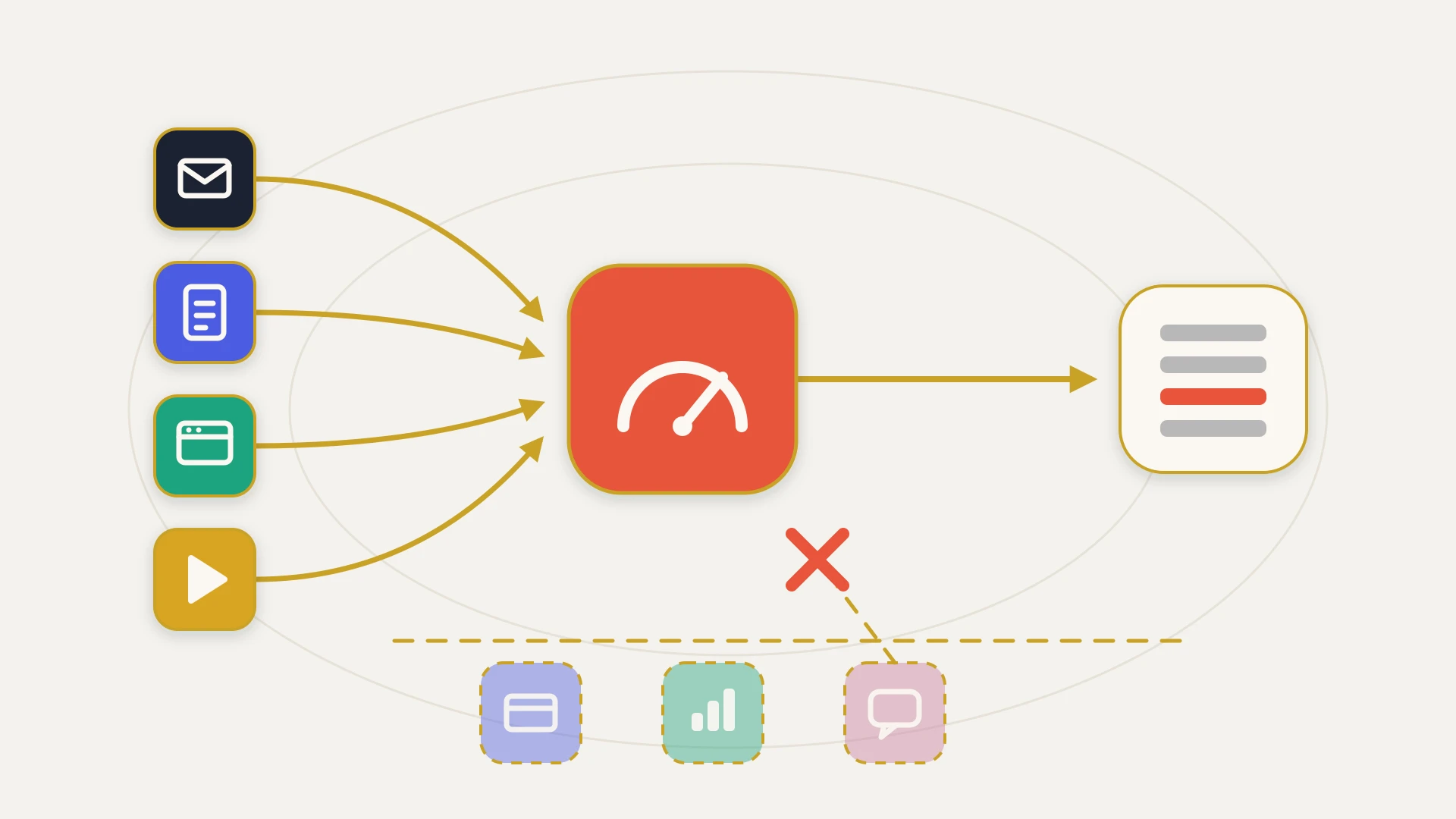
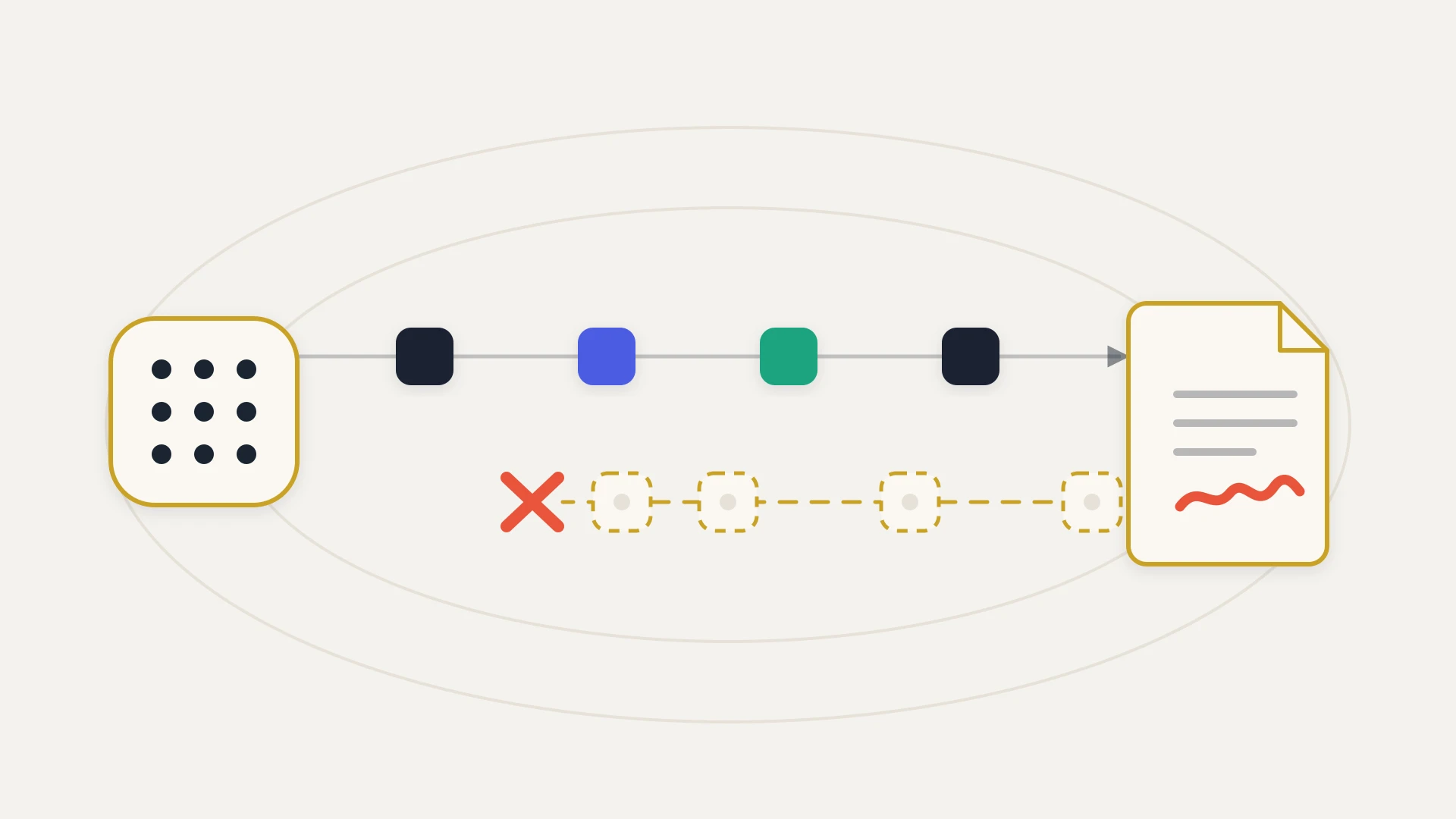
LinkedIn is the only major system in a revenue stack whose data is licensed rather than accessible. The HubSpot LinkedIn Sales Navigator integration is not a shallow connector you outgrow and replace. It is the full extent of the access that exists, granted to HubSpot under a partnership that is currently closed to new applicants. We build and maintain custom HubSpot integrations for a living, and this is the one system where the honest scoping answer starts with what nobody can build, then moves to the considerable amount that is still worth building on your side of the wall.
In this article
1.
2.
3.
4.
5.
6.
7.
8.
9.
10.
11.
12.
13.
Does HubSpot Integrate With LinkedIn Sales Navigator?
Yes, and there are two separate integrations rather than one. This is the same trap the HubSpot Intercom integration sets, and it produces the same confused conversations, where two people describing "the LinkedIn integration" are describing different products.
The LinkedIn Sales Navigator app: a viewing surface
Installed from the HubSpot App Marketplace. It adds a card to contact and company records showing LinkedIn insights without leaving HubSpot. On a contact you get job title, company, tenure in role, location and industry, along with shared connections, experiences and interests, a recent activity stream, related leads at the same company, and the option to request an introduction through a mutual connection. On a company you get industry, size and location, company news, connections you already have, and relationship mapping across the account. A rep can compose and send an InMail from the record.
LinkedIn CRM Sync: the one that moves records
A separate product, configured largely on the LinkedIn side. It imports and saves HubSpot contacts and companies into Sales Navigator lists, logs Sales Navigator activity back to HubSpot, creates and updates HubSpot contacts from Sales Navigator, and lets you include or exclude already-matched records from Sales Navigator searches so your prospecting stops surfacing people you already know.
The distinction that matters commercially: the first one shows you things, the second one changes your data. Most teams install the first, describe it as "syncing with LinkedIn", and are surprised much later to learn that nothing was syncing at all.
What It Takes to Turn Either One On
Both integrations gate on the same two paid things, and the LinkedIn half is the one that stops projects.
There is a per-user step underneath the admin work as well. Each user connects the app while signed in under their own HubSpot login, and each user authenticates their own Sales Navigator account. There is no portal-level service connection, which makes this a user-level app in the same sense Docusign's HubSpot integration is, with the same consequence: offboarding a rep is an integration event, not just an HR one.
One more piece of administrative trivia worth knowing before someone files a bug. For installs after 7 October 2025, a Super Admin or a user with the "Customize record page layout" permission has to add the integration card to the right sidebar of records manually. Installing the app no longer makes it appear. Teams routinely install it, see nothing, and conclude the integration is broken.
What Advanced Plus Costs, and Why You Cannot Look It Up
LinkedIn publishes prices for two of its three Sales Navigator tiers.
| Plan | Monthly per licence | Annual per licence | Syncs with HubSpot |
|---|---|---|---|
| Core | US$119.99 | US$1,079.88 | No |
| Advanced | US$159.99 | US$1,799.88 | No |
| Advanced Plus | Not published | Not published | Yes |
LinkedIn describes Advanced Plus pricing as customised based on your sales team's size, CRM integration and onboarding and training needs, and routes you to a sales representative for a quote.
This is the same shape we found comparing Adobe Sign and Docusign, where a Docusign integration could be sized from a public page before any call and an Adobe one could not. It is worth naming because it changes the sequence of your evaluation rather than just the price. You cannot build a business case for a LinkedIn integration from public information. The only tier that integrates is the only tier whose cost requires a conversation with a salesperson, and that conversation happens before you know whether the integration does what you need.
What Actually Crosses the Boundary
CRM Sync maps four things, and the object pairing tells you a great deal about the direction of travel.
| HubSpot | Sales Navigator |
|---|---|
| Contacts | Leads |
| Companies | Accounts |
| Deals | Opportunities |
| Owners | Not applicable |
Read the third row carefully, because it is the one people miss. Your deals go to LinkedIn as opportunities. Pipeline data, the most commercially sensitive material in your CRM, is part of what flows outward so that LinkedIn can report on influence and return. That may be entirely fine, and for many teams it is the point, since it is what makes reporting on sourced pipeline possible at all. But it should be a decision somebody made rather than a discovery somebody makes.
Data moves in both directions. HubSpot records go out to be matched, and LinkedIn data returns in the form of CRM writebacks, which log Sales Navigator activity against the HubSpot record. Writeback is optional: LinkedIn documents that you can allow CRM sync to import accounts, contacts and leads into Sales Navigator without turning on activity writeback at all. So "two-way" here is a configuration rather than a guarantee, and it is worth confirming which way yours is actually pointed.
What Does Not Cross At All
Four documented limits, and together they define the real shape of the product.
InMail conversations do not reach the timeline. HubSpot documents that InMail conversations will not automatically save to the record's timeline. The send feels native, because the rep composes it inside HubSpot, and then the message and every reply live in LinkedIn. The result is an activity history with a hole in it at exactly the point where first contact usually happens, and any touchpoint report that reads the timeline quietly undercounts the channel the team may be working hardest.
There is no backfill. Only new and updated data will sync. Everything before activation stays where it is. This matches the rule the Intercom app applies to conversations and carries the same consequence: the integration describes your business from its switch-on date forward, so any historical analysis is a separate exercise.
The mapping is not editable. HubSpot states that editing the data sync is not possible, so individual field mappings cannot be toggled the way they can in HubSpot's own data sync apps. You take the mapping as shipped. For a portal with a mature custom property set, this is the difference between an integration that fits your data model and one your data model has to absorb, and no settings screen will close that gap.
Every other connector we write about has a settings page where the gap between what it does and what you need can be narrowed. This one does not. The gap is the product boundary, and the boundary is contractual.
The Part Nobody Tells You: The API Is Closed
Here is where this post departs from every other integration guide on this site.
When a native app stops short, the standard answer is to go around it: read the vendor's API directly, build exactly the flow your business needs, and keep the native app installed for the parts it handles well. That answer is available for QuickBooks, for NetSuite, for Stripe, for Airtable, for ClickUp, for essentially every system we have written about.
It is not available here.
Sales Navigator's APIs live behind the Sales Navigator Application Platform, or SNAP. There are four relevant permissions, and every one of them requires approval:
| Permission | Auth type | What it grants |
|---|---|---|
r_sales_nav_display | Member | Display Services for Sales Navigator |
r_sales_nav_profiles | Application | Matched, publicly available member profile information |
r_sales_nav_validation | Application | Sales Navigator endpoints for CRM data validation |
r_sales_nav_analytics | Member | Sales Navigator analytics retrieval |
LinkedIn's developer documentation is explicit that open permissions are the only permissions available to all developers without special approval, and those cover signing in with LinkedIn and posting on a member's behalf. Nothing resembling prospect data. Everything in the table above requires approval as a SNAP partner.
And then the note that decides the question. LinkedIn's Sales Navigator platform documentation currently carries this, verbatim:
We are not currently accepting new partners for access to the LinkedIn Sales Navigator API. We periodically review our onboarding capacity and will update this page if availability changes.
HubSpot is already a SNAP partner, alongside Salesforce, Microsoft Dynamics 365, Oracle, SugarCRM, Freshsales and Demandbase. That partnership is the integration. It is not a technical achievement your development team can replicate with a good API client and a week of work, and any vendor telling you otherwise is either grandfathered in or doing something they should not be.
So the usual sentence, "the native integration stops here and the build starts", is false for LinkedIn. The native integration stops where the licence stops, and there is nothing on the other side of it for anyone to build.
Why LinkedIn Automation Tools Are Not the Workaround
The moment a team understands the paragraph above, someone suggests the category of tools that promise to solve it: browser extensions and automation platforms that log in as your reps, scrape profile data and export it to your CRM.
We will not build one, and we recommend against buying one. The reason is not squeamishness, it is where the liability lands.
LinkedIn's User Agreement prohibits developing, supporting or using software, devices, scripts, robots or any other means or processes, including crawlers and browser plugins, to scrape or copy the Services, including profiles and other data. It separately prohibits using bots or other unauthorised automated methods to access the Services, add or download contacts, send or redirect messages, or otherwise drive inauthentic engagement. It also prohibits copying or using information obtained from the Services through third parties such as data aggregators or brokers without the content owner's consent, which reaches the resale route as well as the scraping route.
So What Can You Actually Build?
A great deal, and this is the part the closed API does not touch, because it all happens on your side of the wall.
Once LinkedIn has handed a value to HubSpot, it is an ordinary HubSpot property. It has no memory of where it came from and no special protection. Everything downstream of that moment is as buildable as anything else in your portal, and the work is usually more valuable than the pipe would have been.
Make the matched data drive something
CRM Sync matches records and writes activity back. Nothing native decides what should then happen. Routing an account to the right owner based on what came back, updating an account tier, triggering a play when a tracked person changes job, or feeding the result into a lead scoring model are all HubSpot-side work, and all of it is available to you.
Close the reporting gap honestly
Because InMails do not reach the timeline and there is no backfill, any report on outreach built from HubSpot activity alone is wrong in a known direction. A build cannot invent the missing InMails, but it can log the touches your team makes in the channels you do control, mark the LinkedIn gap explicitly rather than silently, and stop the number being quoted as though it were complete.
Fix identity before the match runs
Sales Navigator matches against the records you send it. If your companies are duplicated three ways, you are paying an Advanced Plus licence to match against a mess and getting three partial account views back. The dedup and identity work described in our customer 360 guide is a prerequisite to this integration, not an alternative to it.
Carry it onward to systems LinkedIn will never reach
Sales Navigator integrates with a short list of large CRMs. It does not integrate with your data warehouse, your billing system, your product database or your support desk. Moving what arrives in HubSpot outward to the systems that need it is ordinary integration work on ordinary APIs, with no partner programme involved.
Native, iPaaS or Custom
For the intended job the native integration is genuinely good, and nothing can beat it because nothing else has the licence. Install it, know the four limits, and do not plan anything that depends on contact import, InMail history or historical data. Most teams should stop here.
An iPaaS cannot reach Sales Navigator either, so it adds nothing at the LinkedIn boundary. Downstream of HubSpot it is a reasonable choice at small scale, with the usual caveats we cover in the alternatives guide: a metered bill, and a run history that expires before most data problems surface.
This is where the real work is, and it is entirely available. The build is not a better pipe into LinkedIn, because no such pipe can be licensed. It is turning what the licensed trickle delivers into something your revenue team can act on automatically, and connecting it to the systems Sales Navigator was never going to reach.
How to Set Up the HubSpot LinkedIn Sales Navigator Integration
- 1
Confirm the licence before anything else
Check that the Sales Navigator contract is Advanced Plus, not Advanced. This is a purchasing conversation with a LinkedIn representative, not a toggle, and it is the step that decides whether the rest of the list is possible. Confirm how many licences you actually need at that tier while you are there, since it is priced per seat.
- 2
Decide what you are comfortable sending
CRM Sync maps deals to opportunities. Before switching it on, make an explicit decision about pipeline data leaving HubSpot, and get whoever owns that decision to make it in writing. It is much easier to have this conversation now than after a security review discovers it.
- 3
Clean up identity first
The match quality you get is the record quality you send. Duplicate companies and contacts with stale domains produce partial and misleading account views. Run a HubSpot audit on duplicates and property fill rates before you connect anything, because remediating afterwards means re-matching.
- 4
Install from the HubSpot App Marketplace
Search for LinkedIn Sales Navigator and install. You need Super Admin or App Marketplace access permissions. For CRM Sync, the LinkedIn-side configuration is done by a Sales Navigator account admin, so line up both people before you start rather than discovering the second one mid-install.
- 5
Add the card to the record layout
For installs after 7 October 2025, a Super Admin or a user with the Customize record page layout permission must add the integration card to the right sidebar. Nothing appears on records until this is done. This is the single most common reason a correctly installed integration looks broken.
- 6
Have each user authenticate individually
Every user connects the app under their own HubSpot login and authenticates their own Sales Navigator account. Build this into onboarding, and build the reverse into offboarding, because a departing rep takes their authenticated connection with them.
- 7
Write down the four gaps where your team will look for them
No contact import, no InMail on the timeline, no backfill, no editable mapping. Put these somewhere your reps and your ops team will actually read, because each one generates a support ticket the first time somebody hits it, and all four are working as designed.
What a Custom Build Costs, and What It Does Not Buy
The honest framing here is narrower than on any other connector we write about, so let us be precise about it.
A custom build does not buy you access to LinkedIn. Nobody sells that, we cannot get it, and a quote promising it should end the conversation. What it buys is everything that happens after the licensed data lands in HubSpot, plus the connections to the systems that Sales Navigator's partner list does not include.
That is priced the way all our work is priced: a one-time build fee plus a flat monthly retainer, scoped to what you actually need moved. Routing matched account data to owners and a scoring model is a modest build. Assembling a reporting layer that is honest about the InMail gap, deduplicating identity before the match runs, and carrying the result out to a warehouse and a billing system is a larger one.
The cost teams underestimate is never the build. It is the maintenance, because HubSpot properties change every time ops runs a cleanup, and an unowned pipe drifts until nobody trusts either end. That is as true of LinkedIn as of anything else.
Is your Sales Navigator licence actually driving anything?
If Advanced Plus data arrives in HubSpot and then sits there, if someone is routing accounts by hand off the back of it, if your outreach reporting is quietly missing the InMail channel, or if the matched data needs to reach systems LinkedIn has never heard of, that is a build. StackTie builds custom HubSpot integrations for a fixed fee and maintains them on a flat monthly retainer, alongside the native apps you already run. Live in 14 days or you don't pay. Book a free audit and we'll map exactly where your native option stops.
The Bottom Line
The HubSpot LinkedIn Sales Navigator integration is two products with similar names. One puts LinkedIn insight on the record, the other syncs contacts, companies and deals through CRM Sync. Both need Sales Navigator Advanced Plus, the only tier LinkedIn does not publish a price for, billed per licence.
Know the four limits before you plan anything on top of it. It will not import contacts from LinkedIn, which is the thing most people assume is the whole point. InMails do not save to the timeline, so your activity history has a hole in it where first contact happens. There is no backfill. And the field mapping cannot be edited, so a customised portal bends around the integration rather than the reverse.
What makes this connector genuinely different is none of that. It is that the usual escape hatch is bolted shut. The Sales Navigator API sits behind a partner programme that is not accepting new partners, so unlike every other system in your stack, there is no version of this where you route around the native app and talk to the vendor directly. HubSpot's partnership is the access, and it is the whole of the access.
That is not a reason to be gloomy about it. It is a reason to scope accurately. The wall is real and it is on LinkedIn's side. Everything on your side of it, which is most of what actually turns matched data into revenue, is still yours to build.