Quick summary
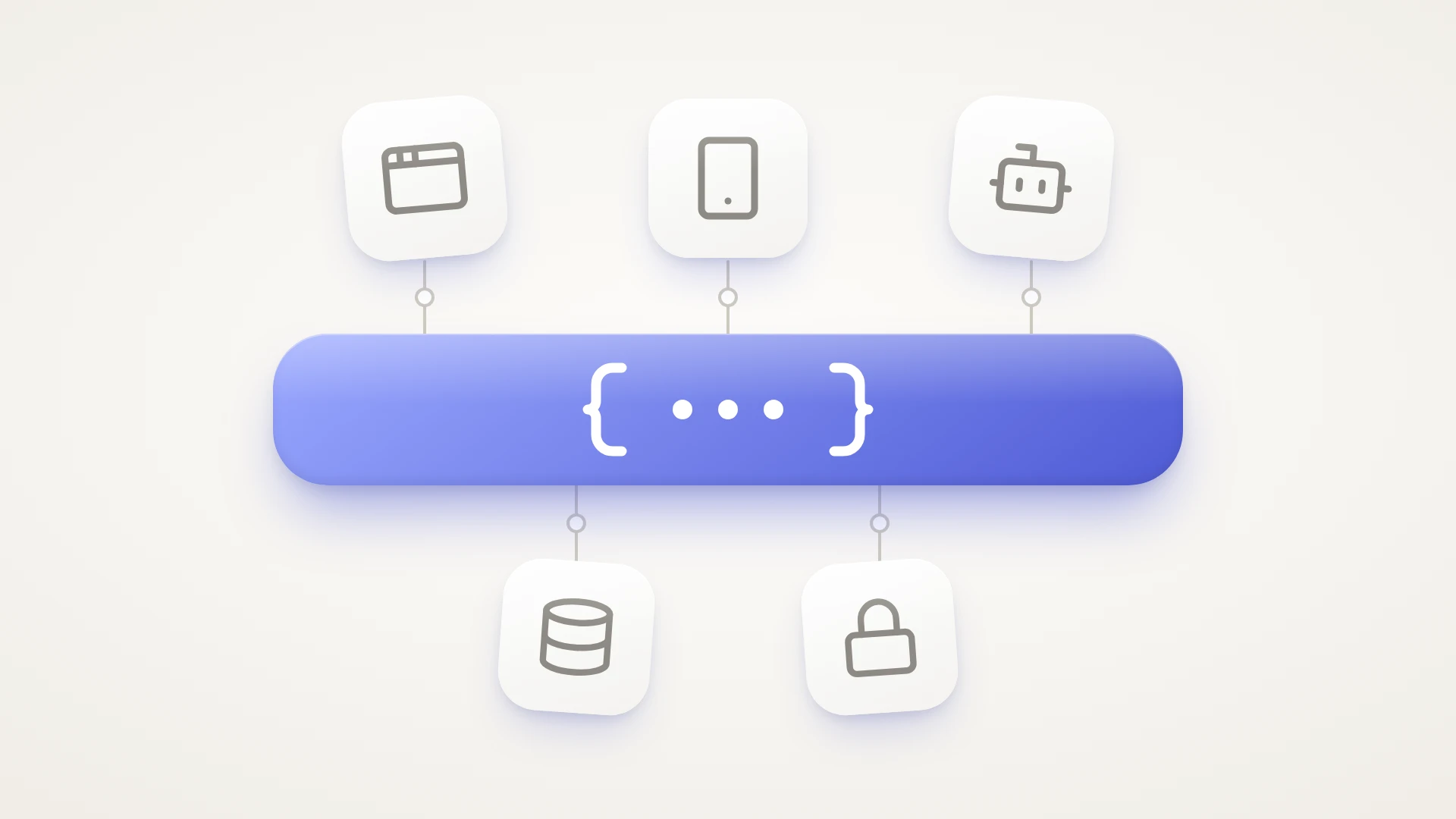
What backend development services build: the part of your app users never see: the database, the business rules, logins and permissions, background jobs and the API your screens talk to. For a live SaaS product, the backend is usually not a separate project but part of the product's own code.
What it costs: a 2026 agency guide puts a SaaS MVP backend at about $15,000 to $40,000 and a multi-tenant SaaS backend at $40,000 to $100,000, plus hosting and 20% to 25% of the build cost a year for upkeep.
What to check: a production backend they built, how they stop one customer from seeing another's data, how backups are tested, and that the code, database and hosting accounts end up in your name.
Backend Development Services at a Glance
| Where to get it | What it costs | How fast | Best for |
|---|---|---|---|
| A developer who works in your product | Their usual rate or a flat monthly fee | Days per feature | Backend work on a live SaaS product |
| Freelance backend developer (Upwork) | About $10 to $100 an hour for software developers | Days | One clearly scoped job, if someone can review the code |
| Vetted network (Toptal) | No public rates | Average match under 24 hours | Screened candidates at a higher price |
| Backend development company | About $15,000 to $40,000 for a SaaS MVP backend (Monocubed) | Weeks to months | A large new system built by a team |
| Backend as a service (Supabase, Firebase) | Free tiers; Supabase Pro from $25 a month | Hours to set up | Early products with standard logins and data |
| Full-time backend engineer | A median $135,980 a year for US software developers, before benefits | Months to hire | Years of daily backend work ahead |
Before you hire anyone, answer these three questions:
- Question 1, "Am I building a backend or adding to one?" Adding features to a backend that already works costs far less than designing one from nothing, and it changes who you should hire.
- Question 2, "Could Supabase or Firebase do this part?" Logins, a database and simple APIs come ready made. Pay for custom code where your business rules are unusual, not for what a service already does.
- Question 3, "Who keeps it running after launch?" Every backend needs updates, backups and monitoring. Get the monthly cost of that in writing before the build starts.
Need backend work done on your SaaS?
A senior developer on subscription: $2,995 a month, as many requests as you like, each shipped within 2 business days, and your money back if the first 14 days don’t prove it.
In this article
1.
2.
3.
4.
5.
6.
7.
8.
9.
10.
This guide is for founders of SaaS products who need backend work done, either a backend for a new product or new features on the one they have, and are deciding who should do it. It covers what the backend is in plain English, what backend development services include, what they cost to build and run, and how to choose a provider. If all you need is an API for customers or partners, our guide to API development services covers that narrower job.
What the Backend Is (in Plain English)
Every web app has two halves. The front end is what people see and click: the screens, forms and buttons. The backend is everything behind them: where the data is stored, the rules that decide what happens, and the code that runs on a server instead of in the browser.
The database
Where your customers, accounts, invoices and settings live. In Stack Overflow's 2025 Developer Survey, PostgreSQL was the most used database, by 55.6% of all respondents and 58.2% of professional developers.
The business logic
The rules of your product: what a user on the free plan may do, what happens when a payment fails, who can see which records.
Logins and permissions
Who someone is, and what they are allowed to read or change once they are signed in.
The API
The doorway your front end, mobile app or customers use to reach the data and the rules.
Background jobs
Work that runs without anyone clicking: sending emails, importing files, syncing with Stripe, building nightly reports.
Hosting, backups and monitoring
The servers it runs on, copies of the data in case something goes wrong, and alerts when it breaks.
A full stack developer builds both halves. A backend developer focuses on the second. For a small SaaS product, one person often does both; our guide to hiring a full stack developer explains when that works.
What Backend Development Services Include
Most providers describe the same stages. Whoever you hire, check that each one is covered:
- 1
Step 1, Scope and data design
Write down what the product must do and design the database around it: which records exist, how they relate and which customer owns each one.
- 2
Step 2, Choose the stack and hosting
Pick the language, framework, database and host, or decide which parts a backend as a service such as Supabase or Firebase will handle.
- 3
Step 3, Build the logic, logins and API
Write the business rules, the sign-in and permission checks, and the API the front end calls.
- 4
Step 4, Connect outside services
Wire in payments, email, file storage and the other tools your product depends on. Our guide to API integration services covers this step in depth.
- 5
Step 5, Test, launch and keep it running
Test the rules with real examples, set up backups and monitoring, and plan who handles updates after launch.
Building a backend vs adding to one
Search results for backend development services are almost all agency pages, and most of them sell the first case: a new backend designed from nothing, often with a team. Many SaaS founders are in the second case: the product is live, the backend works, and the list of features that need backend changes keeps growing. That work is smaller, steadier and best done by someone who learns your code once and stays. Read each provider's pitch with your case in mind.
Custom Backend Development or a Backend as a Service?
A backend as a service (often shortened to BaaS) gives you a database, logins, file storage and a ready-made API without writing server code. Supabase and Firebase are the best known. Supabase's pricing page lists a free plan (500 MB database, 50,000 monthly active users, projects paused after a week of inactivity) and a Pro plan from $25 a month. Firebase has a no-cost Spark plan and a pay-as-you-go Blaze plan that keeps the free allowance.
A backend as a service suits you when
- You need standard logins, a database and an API quickly
- Your budget for the first months is small
- You have no one to run servers and backups
- Your data rules are simple, such as each user owns their own records
Custom backend development suits you when
- Your billing or plan rules are unusual
- You import, sync or process data in the background
- A customer's system needs a custom integration
- You have hit the service's limits on speed, cost or features
This is rarely an either-or choice. Most products end up with a mix: a service for logins and the database, and custom code for the parts that make the product different, such as billing rules, imports or an integration with a customer's system. A good backend developer will tell you which parts to build and which to rent.
What Backend Development Services Cost
Prices vary because "backend" covers everything from a booking API to a fintech core. These figures come from vendor guides, so treat them as ranges for budgeting, not quotes.
Monocubed puts a simple backend, such as an internal admin tool or a basic booking API, at $5,000 to $15,000 over 3 to 6 weeks, and enterprise systems at $100,000 to $200,000 or more over 6 to 12 months. Its regional rates run from $25 to $60 an hour in India and South Asia, $35 to $80 in Latin America and $40 to $80 in Eastern Europe, to $70 to $150 in Western Europe. Full Scale, which sells offshore developers, puts US backend contractors at $80 to $150 or more an hour and a fully loaded offshore engineer through its team model at about $35.
Running costs: the part many quotes leave out
The build is only the first bill. Monocubed lists hosting at about $50 to $8,000 a month for early-stage to mid-scale apps, monitoring at $200 to $1,500 a month and security audits at $5,000 to $25,000 a year. Its year-one example for a mid-complexity SaaS adds up to $102,000: a $60,000 build plus $42,000 of hosting, monitoring, security and maintenance. A small product on a managed host will spend far less than that, but the shape holds: budget for keeping it running, not just for building it.
Where to Get Backend Development Services
A developer who works in your product
For most SaaS founders, backend work is not a separate project. A new plan limit, a Stripe webhook, a CSV import or a faster report all touch the same code and the same database as everything else. A developer who already works in your codebase, or one who joins it through a development subscription, can do this as ordinary feature work, one small, tested change at a time.
Best for: a live SaaS product with a steady list of backend work.
Hire a backend developer as a freelancer
Freelance marketplaces list thousands of backend developers. Upwork's cost page puts software developers at about $10 to $100 an hour, and that spread reflects real differences in experience. On an open marketplace you do the vetting, so ask for a backend they built that real customers use, and start with one small paid job. Our list of Upwork alternatives compares other marketplaces and their fees, and our guide to developer hourly rates explains what drives the price.
Best for: one clearly scoped job, with someone who can review the work.
Vetted networks
Toptal has a dedicated page for back-end developers. It says fewer than 3% of applicants are accepted, the average match takes under 24 hours, you can typically hire in about 48 hours, and there is a trial of up to two weeks. It publishes no rates; our Toptal review explains how its pricing works.
Best for: founders who want screened candidates and can pay above marketplace rates.
A backend development company
A backend development company brings a team: someone to scope the work, several developers, often a tester and a project manager. Agencies suit a large new system with a deadline, or a company with no developer at all. Their client counts and ratings are self-reported, so ask for references you can call. Our guide on how to choose a software development company covers how to vet one.
Best for: a large new backend that needs several people at once.
A full-time backend engineer
If the backend is the heart of what you sell and there are years of daily work ahead, an employee builds deep knowledge of it. The US Bureau of Labor Statistics puts median pay for software developers at $135,980 a year (May 2025), before benefits and recruiting. Our guide on how to hire a software developer covers the full-time route.
Best for: a product with more backend work than one part-time person can handle.
The Mistake That Costs the Most: One Customer Seeing Another's Data
In a SaaS product, every customer's data sits in the same database. The most important job of the backend is to make sure each customer only ever reaches their own.
OWASP's advice is plain enough to put in any brief:
- Deny by default. Apart from public pages, nothing should be reachable until a rule says it is.
- Check permissions on the server. OWASP says access control "is only effective when implemented in trusted server-side code or serverless APIs." Hiding a button in the front end is not a security control.
- Tie every record to its owner. Each query should check that the record belongs to the customer asking for it.
- Log failures and alert on them. Repeated denied requests are often someone probing for a gap.
Ask every candidate how they enforce this in your product. A strong answer names where the check lives in the code and how it is tested. If you are not sure your current backend gets this right, our guide to code audit services explains how to find out.
How to Choose a Backend Development Company or Developer
Questions to ask any backend provider
- Can you show me a backend you built that is in production today, and what it does?
- Which parts would you build, and which would you use a service such as Supabase, Firebase or Stripe for?
- How do you make sure one customer can never read another customer's data, and how is that tested?
- How do you change the database without taking the app down or losing data?
- How are backups taken, and when did you last test restoring one?
- What will hosting and upkeep cost each month after launch, and who does that work?
- Whose accounts hold the code, the database and the hosting?
Red flags
- A rebuild before they have read your code. If your product works, a good developer improves it piece by piece. A full rewrite is sometimes right, but it should come after a review, not before.
- Permissions handled "in the front end". The checks belong on the server, as OWASP says.
- No answer on backups. Backups that have never been restored are a hope, not a plan.
- Accounts in their name. Your company should own the code repository, the database and the hosting account, with the developer added as a user.
If your product already has backend problems, such as slow pages, failed jobs or a developer who has gone quiet, start with our guide to software project rescue before you hire for new work.
Which Route Fits You?
Supabase or Firebase covers a lot of the work for a small monthly fee. Add custom code where your rules are unusual.
The work fits your existing code, database and rules from the start, and ships one small, tested change at a time.
The fastest start. Ask for a production example and keep the accounts in your name.
A full team and process at a higher price. Get the running costs in writing.
Hire when there is more backend work than one part-time person can handle. Until then, the salary buys more than you can use.
If the backend also needs proper hosting, deploys and monitoring around it, see our guide to DevOps consulting services.
How StackTie Fits
StackTie is a development subscription for founders who have a web app and more to build than people to build it. Backend work is a large part of what you can ask for: databases, APIs, logins and permissions, payments and billing, background jobs and integrations. You add requests in plain English to your own Trello board (add a usage limit to the free plan, import customers from a CSV, retry failed Stripe payments, make the reports page load faster), and we work them one at a time in the order you set. Every request comes back within 2 business days as a pull request with a plain-English summary of what changed and why, so a big backend project ships in small pieces you can check as you go. One senior developer, Michael, leads every build. Everything we build belongs to your company and lives in your own accounts. There is no contract, you can pause when the work is quiet, and there is a money-back guarantee if it is not a fit. We do not build native iOS or Android apps, we are not a whole team working in parallel, and we do not provide 24/7 on-call support or compliance audits. The flat monthly price and what is included are on the homepage.