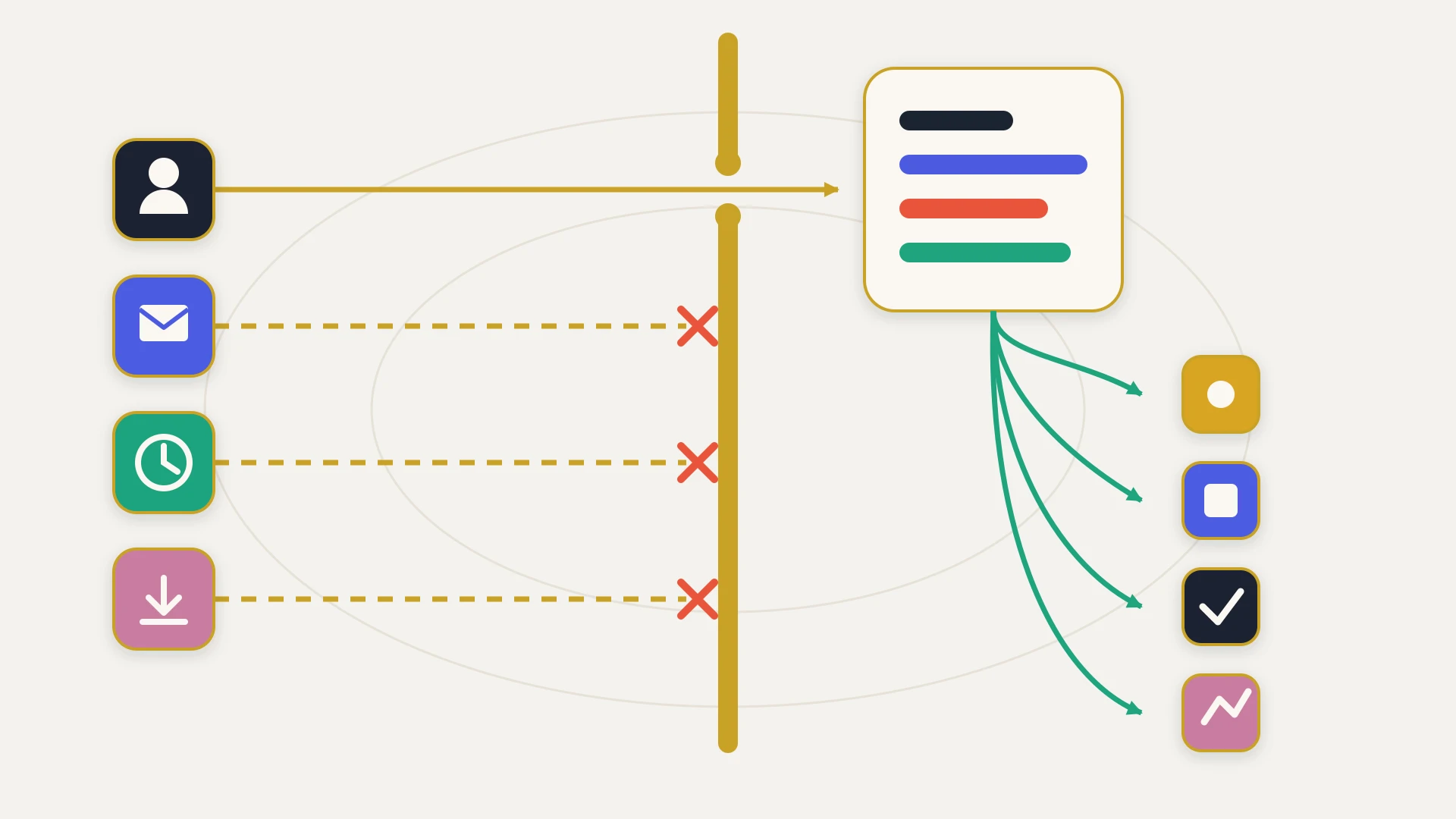
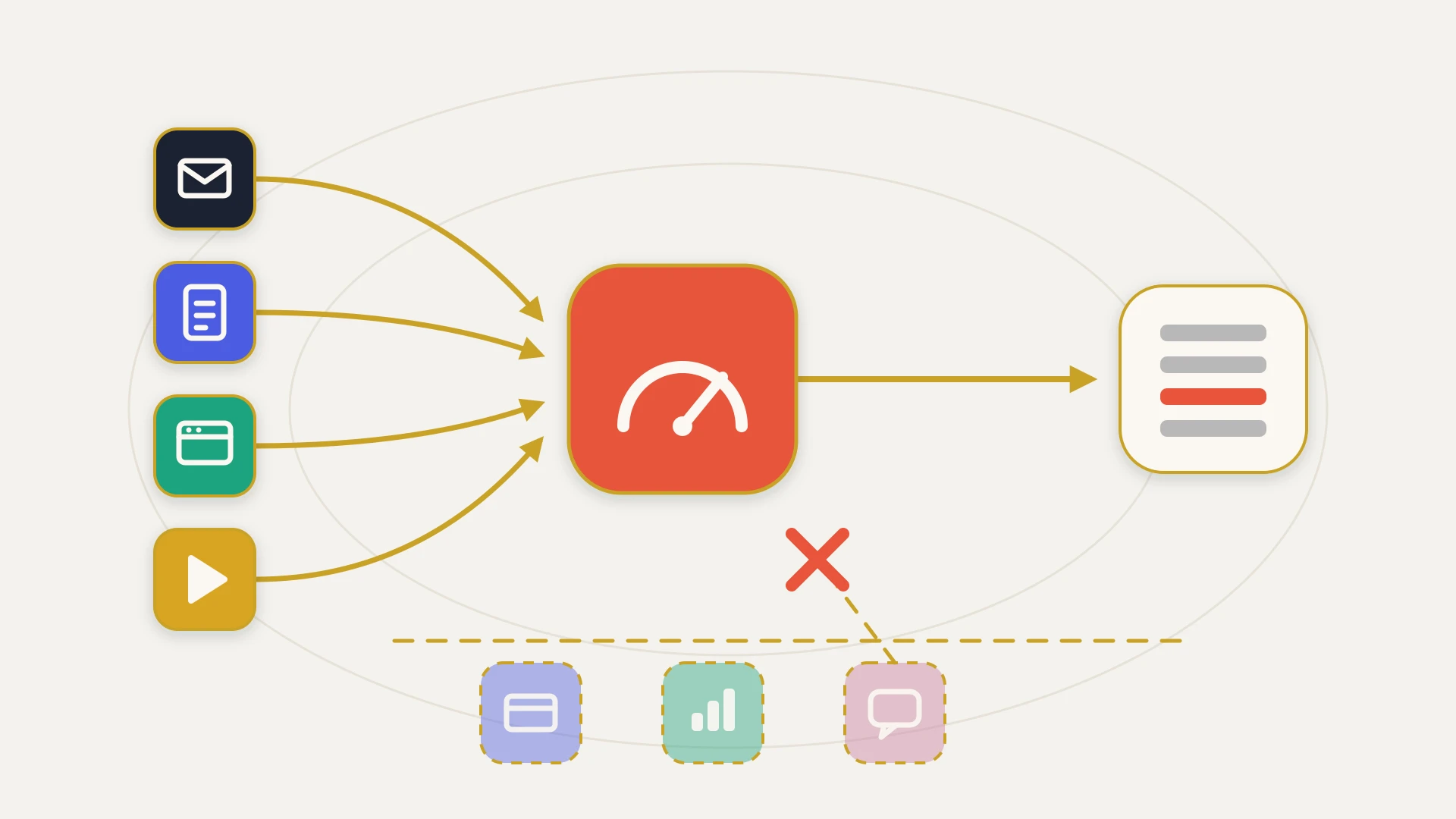
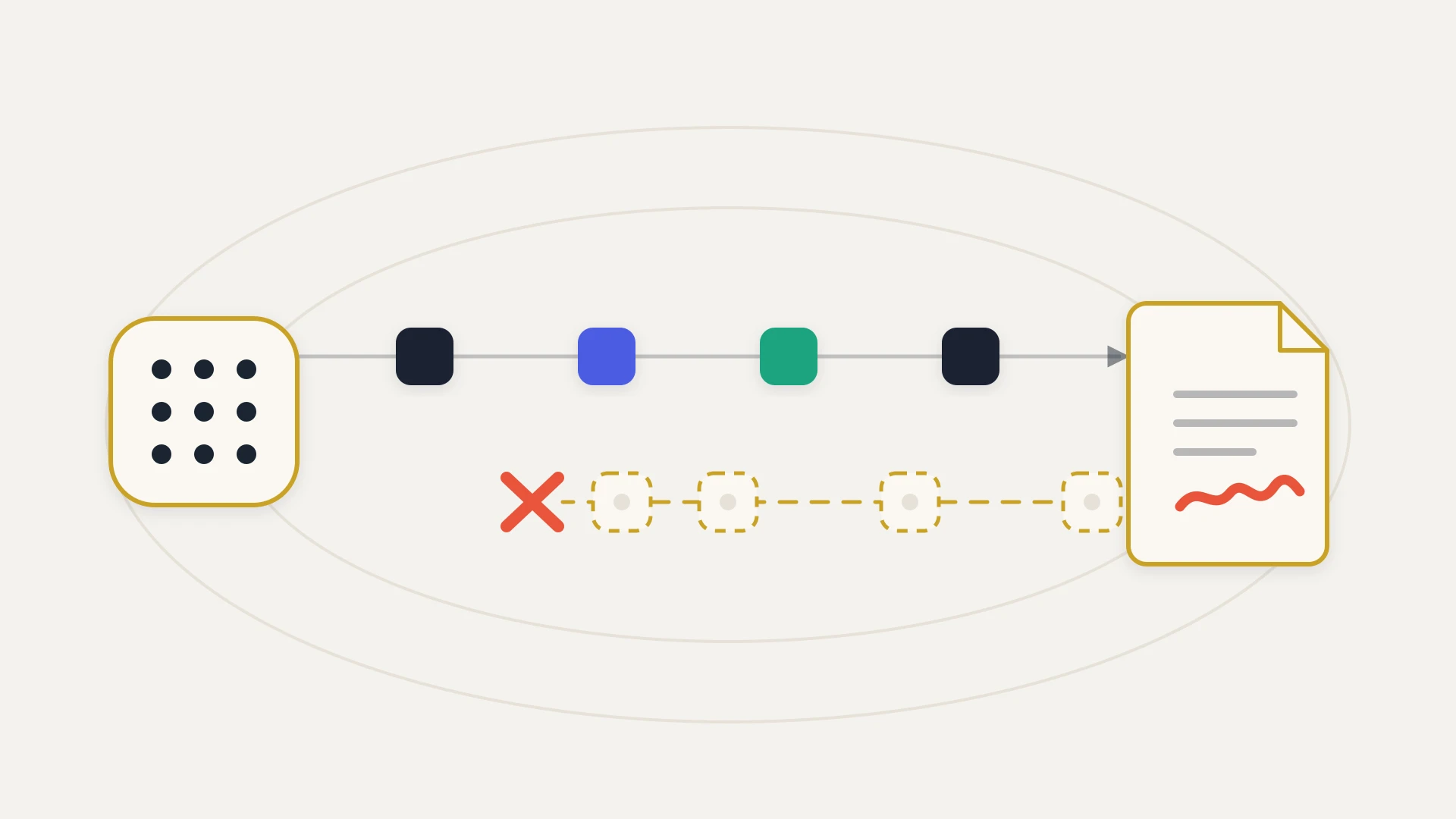
There is a moment most revenue teams reach with HubSpot where the question stops being "does an integration exist" and becomes "why does the one we installed not do the thing we need". The app is connected. It syncs contacts and companies. It does not touch the custom object the whole business runs on, it will not write back to the field finance cares about, and the setting you keep looking for is not hidden, it was never built.
That is the point at which a custom HubSpot integration goes from an indulgence to the cheapest option on the table. This guide is about that decision and everything after it: when a build is genuinely justified, what HubSpot API integration services should include if you are paying for them, what drives the price, how long it should take, and how to tell a firm that has shipped this before from one that is about to learn on your portal. If you are earlier than that and still comparing approaches, the broader guide to HubSpot integrations covers the three routes side by side.
In this article
1.
2.
3.
4.
5.
6.
7.
8.
9.
10.
What Is a Custom HubSpot Integration?
A custom HubSpot integration is a connection written directly against HubSpot's API instead of installed from the App Marketplace or assembled in a no-code tool. It runs as your own code, authenticated through a HubSpot private app with scoped access, and it moves exactly the records your process needs in exactly the direction you decided.
Mechanically it is not exotic. HubSpot exposes CRM objects through a REST API: contacts, companies, deals, tickets, line items, quotes, products, and any custom objects you have defined. It can push webhooks when records change. A custom integration reads and writes through those endpoints, holds a mapping between the two systems, and runs somewhere you control.
What makes it different from the alternatives is not craftsmanship. It is the absence of a ceiling. A native app does what its vendor decided to build and no configuration extends it. An iPaaS does what a trigger and action model can express, which is a lot until it suddenly is not. A custom build is limited only by what the API exposes, which is nearly everything.
That second sentence is the part sales pages leave out. Freedom cuts both ways. Everything a native app quietly handles for you, including rate limits, retries, schema changes and the vendor keeping it alive, becomes your responsibility the moment you build.
When a Custom HubSpot Integration Is Worth Building
Most integrations should not be custom. If a marketplace app exists and covers the objects you need, install it and spend the money somewhere it moves revenue. HubSpot's marketplace lists well over a thousand apps, and the native data sync in Operations Hub, now called Data Hub, covers a genuinely wide set of common systems bidirectionally with no code at all.
The build case starts when one of these is true, and it is usually obvious in hindsight.
Signs a build is the right call
The native app stops short of the objects you need. This is the most common trigger by a distance. The connector syncs contacts, companies and deals, and the thing your business actually runs on is a custom object, a line item, a quote or a ticket. There is no setting that extends a connector's object coverage, and support will tell you so politely.
Your no-code flows have grown code steps. Filters, branches, lookup tables and a JavaScript block wedged in the middle to force behaviour the tool was not designed for. When the workaround is more complex than the logic it implements, you are already paying build-level complexity, just without owning anything at the end.
Per-task pricing has crossed the line. Metered platforms are excellent value at low volume and a genuine line item at high volume, because the meter runs on exactly the behaviour that makes the integration valuable. Once the annual spend approaches the cost of owning the code, the arithmetic has already flipped and the only question is when you act on it.
You need real two-way sync with a system of record. Not two one-way flows pointed at each other. Actual field-level ownership, where HubSpot owns what reps edit, the other system owns what it computes, and there is a defined answer when both change the same property in the same window. Trigger and action models cannot express that, and pretending otherwise produces data nobody trusts.
Something has to happen in seconds. A deal closing that must provision an account, a payment failing that must pause a sequence, a score crossing a threshold that must reroute an owner today. Scheduled batch cannot express urgency, and shortening the interval is a cost lever rather than a fix.
Nobody owns the thing that already exists. The most honest signal is behavioural. If someone exports from HubSpot every month to reconcile it against another system by hand, the current integration is already not trusted, and the manual work is a maintenance retainer being paid in salary.
If none of those apply, do not build. That is not modesty, it is the correct answer, and a firm that cannot tell you when not to hire them is telling you something.
Custom HubSpot Integration vs Native Apps and iPaaS
These are layers rather than rivals, and mature stacks run all three at once. The mistake is not choosing wrong, it is choosing once and never revisiting when the shape of the problem changes. If the middle option is unfamiliar, the guide to iPaaS covers the category properly.
Free or cheap, installed in an afternoon, and maintained by someone else forever. If it fits, this is the right answer and building anything else is waste. Check the object coverage against your actual process rather than the marketing page, because that is where the gap always is.
Ideal for the connection nobody has decided is permanent yet, and genuinely the fastest way to find out whether a workflow is worth automating at all. Expect it to get expensive and brittle as logic and volume grow, and treat that as the tool working correctly rather than failing.
Built against the API directly, so it reaches every object, enforces field-level ownership, fires in seconds and costs the same whether it runs a hundred times a day or a hundred thousand. Higher up front, no meter, and you own the result.
What HubSpot API Integration Services Should Include
If you are buying rather than building, this is the part to scrutinise, because the difference between a quote that looks cheap and one that looks expensive is almost always which of these are in scope. The connection itself is the easy half. Everything below is what determines whether it still works in six months.
A written field map, before any code
Every property in scope, in both directions, with the transformation rules and the owner of each field named explicitly. This document is the deliverable that prevents the most expensive category of rework. The data mapping guide covers the field-level work in depth, including the mapping types that break in production.
Scoped authentication you control
A private app inside your own HubSpot portal, with only the scopes the integration needs, rather than a personal login belonging to whoever set it up. Integrations authenticated as a departing employee are a recurring and entirely avoidable outage.
Rate limit handling that respects the real numbers
HubSpot allows 650,000 API requests per day on Professional and 1,000,000 on Enterprise, with a burst limit of 190 requests per 10 seconds. The CRM Search API is far tighter at 5 requests per second, and search is exactly what a naive integration leans on to find the HubSpot record matching a row from the other system. Carrying record IDs and writing in batches rather than searching per record is the difference between a build that scales and one that throttles on day one.
Retries with backoff, and an error path a human sees
Transient failures are normal. Silent transient failures are how data goes wrong invisibly. Failed operations should retry with backoff and then, if they keep failing, alert someone rather than disappearing into a log nobody reads.
Deduplication against a nominated match key
Which field decides two records are the same record, and what happens when it is missing or duplicated. Get this wrong and the integration does not break, it quietly multiplies your contact database, which is considerably worse.
Loop prevention on anything bidirectional
Without it, a write into HubSpot triggers a sync out, which triggers a write back, which triggers a sync out. Two-way integrations that lack loop prevention do not fail loudly, they burn API quota and rewrite the same records forever.
A historical backfill, if existing records have to match
Going forward is straightforward. Reconciling everything that already exists on both sides, including the records that disagree, is a separate piece of work and should be a separate line in the quote rather than an assumption.
Monitoring you can actually look at
Not a dashboard nobody opens. A clear answer to two questions: is it running, and did anything fail since yesterday. If the only way to know the integration is healthy is that nobody has complained, it is not monitored.
What a Custom HubSpot Integration Costs
Custom HubSpot integration pricing is almost always a one-time build fee plus ongoing maintenance. That structure is near universal. What varies enormously is the size of both numbers, and the variance is not arbitrary, it tracks five specific things.
| Cost driver | Cheaper end | More expensive end |
|---|---|---|
| Systems involved | HubSpot and one other system | HubSpot plus several, each with its own auth, schema and failure modes |
| Direction | One way, HubSpot writes out or reads in | Bidirectional, with loop prevention and a defined system of record per field |
| Object types | Contacts and companies only | Deals, tickets, line items, quotes and custom objects, each with its own associations |
| History | Go-forward only, starting from launch day | Full backfill, including reconciling records that already disagree on both sides |
| Conflict rules | Last writer wins, accepted explicitly | Field-level ownership, precedence rules, and an audit trail of what was overwritten |
A single one-way connection between HubSpot and one other system, contacts and companies, no backfill, is a small build. Bidirectional sync across five object types including custom objects, with field-level ownership and a full historical reconciliation, is several times that. Anyone who quotes both at the same number has not read the second one.
A custom build inverts the cost curve of a metered platform. You pay more up front and then nothing per task, so the more often the integration runs, the more the economics favour having built it.
The half nobody budgets for
The build is the predictable part. Maintenance is where integrations quietly become expensive, and the reason is that neither system holds still.
HubSpot ships API changes and deprecations on its own schedule. The other system does the same, on a schedule that has nothing to do with yours. Neither of them tells you which of your field mappings the change affects. On top of that, most drift is self-inflicted and entirely reasonable: someone renames a property during a cleanup, marketing adds a required field to a form, ops restructures a pipeline, a spreadsheet import creates duplicates the match key was never designed to handle.
None of those are failures. They are a business changing. An owned integration absorbs them in an afternoon. An unowned one absorbs them silently and surfaces months later as two systems that confidently disagree, usually in a board deck.
This is why the model is a fixed build fee plus a flat monthly retainer rather than an hourly rate: the incentive should be an integration that keeps working, not one that keeps generating tickets. StackTie's build fee and retainer are published on the pricing page rather than quoted per call, and the retainer starts 30 days after go-live.
How Long a Custom HubSpot Integration Takes
A well-scoped single connection is a two week job. If a quote comes back with a two quarter timeline, the honest reading is usually that the scope has not been pinned down rather than that the engineering is hard.
The work that consumes calendar time is rarely the code. It is three things, in this order:
Agreeing the field map
Which fields, which direction, who owns each one on conflict. This requires a decision from someone with authority over both systems, and getting that decision is a scheduling problem rather than a technical one. Builds slip here more than anywhere else.
Getting credentials with the right scopes
Someone has to create the private app, someone else has to approve access to the other system, and in regulated environments a third person has to sign off. Start this on day one rather than day nine.
Deciding what happens to the records that already disagree
Every backfill surfaces the same uncomfortable question: these two records claim different things, which one is right. That is a business decision, not an engineering one, and no amount of code speeds it up.
Fix those three before building and two weeks is comfortable. Leave them open and no timeline is meaningful, which is exactly why StackTie fixes scope before taking a deposit and then commits to 14 days from deposit to live, refundable in full if that window is missed.
How to Choose a HubSpot Integration Partner
The market for HubSpot integration services is crowded and the signals most buyers use are weak. Worth understanding why before you shortlist anyone.
HubSpot's Solutions Partner tiers, the Gold through Elite ladder, are calculated largely on sold and managed subscription revenue. They are a real signal about how much HubSpot a firm sells and a poor signal about how well it writes code against the API. A large inbound marketing agency can reach a high tier without ever having shipped a production integration. The guide to top HubSpot partners covers how the tiers and the six accreditations are actually calculated, and which of them mean anything for technical work.
For an integration specifically, judge on evidence of shipped and maintained builds. These questions separate the two quickly.
Questions worth asking before you sign
"How do you handle the CRM Search API limit?" The answer should mention five requests per second and describe carrying record IDs so writes happen by ID in batches rather than searching per record. A firm that has shipped this answers immediately. A firm that has not will talk about rate limits in general terms.
"Who owns the code and where does it live?" The right answer is a repository you control and a private app in your own portal. If the build runs on their infrastructure under credentials only they hold, leaving means rebuilding rather than migrating, and the price of leaving was set the day you signed.
"Show me an integration you still maintain." Building is easier than keeping alive. Ask for something shipped over a year ago that is still running, and ask what has broken since. The willingness to answer that second part honestly is the tell.
"What happens when a sync fails at 2am?" You are listening for a specific mechanism: retries, alerting, and a named human. "We monitor it" without describing how is not an answer.
"What is out of scope?" A firm that has done this before has a clear list. A firm that says everything is in scope has either not read the requirements or is planning to renegotiate later, and both cost you the same.
One structural note on who to hire. A full-service agency that also does integrations will bundle the work into a broader retainer, which suits teams that want strategy, content and technical work under one contract. A specialist does one thing and prices it as a product. Neither is better in the abstract. The mismatch to avoid is buying a fixed technical outcome from a firm whose actual business is monthly retained marketing hours, because the integration will always be the thing that slips when a campaign is due.
What You Should Own on Day One
An integration is either an asset on your balance sheet or a dependency on someone else's. The difference is four deliverables, and they are worth naming in the contract rather than assuming.
What an owned integration looks like
- Code in a repository you control
- A private app inside your own HubSpot portal
- Credentials your team holds and can rotate
- A written field map and runbook
- Monitoring wired to your alerting
- The ability to hire anyone to take it over
What a dependency looks like
- Code on the vendor's infrastructure
- Auth through the vendor's account
- Credentials only they can rotate
- Mapping documented in someone's head
- Alerts that go to their inbox
- Rebuilding from scratch if you leave
None of this means you should run the integration yourself. Most teams should not, and a retainer that covers monitoring and upkeep is genuinely better value than an internal engineer's attention. The point is that outsourcing the operation of something is a different arrangement from not owning it, and vendors who blur the two are relying on you not to notice until you want to leave.
Native app connected and still not doing the thing you need?
If the connector stops short of your custom objects, your no-code flows have grown code steps, per-task pricing has crossed the line, or you need real two-way sync with an owner for every field, that is a build. StackTie builds custom HubSpot integrations for a fixed fee and maintains them on a flat monthly retainer, with the code and credentials in your hands. Live in 14 days or your money back. Book a free audit and we'll map exactly what is worth building and what is not.
The Bottom Line
Most integrations should not be custom. Install the marketplace app, check its object coverage against your real process, and if it fits, stop there and spend the money on something that moves revenue.
Build when the ceiling is real: when the connector cannot reach the objects your business runs on, when your no-code flows have grown code steps to force behaviour the tool was never designed for, when the meter costs more each year than owning the code, when you need genuine two-way sync with a defined owner for every field, or when something has to happen in seconds rather than at the next scheduled run.
When you do build, the connection is the easy half. What determines whether it still works next year is the unglamorous list: rate limit handling that respects the real ceilings, retries with backoff, deduplication on a match key, loop prevention, a written field map, and an error path that alerts a person. Buy those explicitly, price the maintenance rather than discovering it, and make sure the code, the credentials and the documentation end up in your hands. Get that right and a custom HubSpot integration stops being a project and starts being infrastructure, which is the only version worth paying for.