Every comparison of these two opens with a feature grid, and for most of the last decade that was the right call. The two products do roughly the same job, they have done for years, and the honest answer to "which has better ticketing" has long been "it does not matter much, pick one."
That answer stopped working when both companies put an AI agent in front of the queue and started charging for it separately. The seat prices are still on the pricing pages and they are still close enough to argue about. The AI line is not close at all, because the two vendors are not metering the same event.
Zendesk charges when its AI agent succeeds. Freshdesk charges when its AI agent is asked. Both publish this plainly, neither is hiding anything, and almost nobody puts the two definitions on the same page before signing.
We build and maintain custom HubSpot integrations for a living, so the disclosure goes at the top: we do not sell either of these, we are not a partner or reseller of either, and for most teams both are a perfectly reasonable choice. The narrow thing we can add is that the number of AI conversations, and the number of distinct customer records those conversations attach to, are set by whatever is feeding the help desk. On one of these two platforms that is a direct line on the invoice.
In this article
1.
2.
3.
4.
5.
6.
7.
8.
9.
10.
11.
12.
13.
14.
15.
The Short Answer
Freshdesk gives you a bill you can calculate and a platform whose documentation is currently mid-migration. Zendesk gives you a bill you cannot calculate without a sales conversation and a platform whose limits are precisely documented and genuinely restrictive in one specific place.
If your AI agent is going to resolve a high proportion of what it touches, Zendesk's meter is the one that punishes you, because every success is a charge and the allowances are small. If your AI agent is going to resolve a low proportion of what it touches, Freshdesk's meter is the one that punishes you, because it charges for the attempt and the failures land on your invoice as well as on your team.
That is an unusual shape for a pricing comparison. It means the right answer depends on a number you do not have yet, namely how good your bot is going to be on your content, and it means the two platforms reward opposite outcomes. Nobody's pricing page frames it that way.
Read on if any of three things are true: something in your stack is going to open tickets automatically, you have more than one record for the same human being in your CRM, or you need to tell a finance team in advance what the AI line will cost. All three interact with the meter, and none of them appear on a feature grid.
The Two Meters Count Different Events
Here are both models in the vendors' own words, because the wording is the whole comparison.
Zendesk bills per automated resolution, and states that "paying per automated resolution means that you pay only for customer requests that were successfully resolved by the AI agent, without any escalation to a human agent." It goes further and verifies the claim, because "conversations flagged as resolved are also verified by a large language model (LLM)."
Freshdesk bills per Freddy AI Agent session, and defines one as "all interactions between an end-user and the Freddy AI Agent or chatbot that occur within a 24-hour window," with its pricing page describing the email case as "a 72-hour window starting from the customer's first email."
Put those definitions side by side and the difference is not a matter of degree. Zendesk's is conditional on an outcome and has a verification step attached to it. Freshdesk's is a description of a time window during which a conversation happened.
We covered the Zendesk side of this meter in detail, including the silence windows and the exclusions, in Intercom vs Zendesk, so this page will not restate the mechanics. What it will do is follow the one consequence that only becomes visible when you set Zendesk's model next to a model that works the other way round.
Zendesk charges you for the wins and eats the losses. Freshdesk charges for the attempt and is indifferent to how it went.
Neither position is unreasonable. Zendesk's is easier to sell and harder to forecast. Freshdesk's is easier to forecast and harder to love when your deflection rate is poor. But they produce opposite incentives, and a team that switches from one to the other without noticing will find its AI budget behaving in a way that makes no sense.
What Happens When the Bot Loses
This is the part worth slowing down for, because it is where the two models actively disagree about who absorbs a failure.
A customer asks something the AI cannot answer. It tries, it gets nowhere, the conversation goes to a human, and the human sorts it out.
On Zendesk that sequence produces no automated resolution, because escalation to a human is the disqualifying event. You paid a human's time and nothing else. The AI's failure was free.
On Freshdesk the interaction happened inside the window, so by the published definition it is a session. You paid $0.49, and then you paid a human's time as well. The AI's failure cost you twice.
The practical consequence runs in both directions, and this is what makes the comparison genuinely difficult rather than one-sided.
A good bot is expensive on Zendesk. Every conversation it closes is a billable resolution. Improving your knowledge base raises your Zendesk AI bill. That is coherent, because you are saving a human's time on every one of them, but it means the AI line grows exactly as fast as the thing you were trying to achieve.
A bad bot is expensive on Freshdesk. Every conversation it touches is a session whether or not anything came of it, so a poorly trained agent running against thin help content produces a full meter and an empty result. Improving the bot does not lower that bill at all, because the bill was never about outcomes. It only stops the second payment, the human one.
So there is a crossing point, and you can locate it with one division.
The Break-Even Is One Division, and Zendesk Will Not Give You the Other Half
Freshdesk publishes the price of its unit. Zendesk does not publish the price of its unit anywhere: the pricing page, the automated resolutions article and the management article all describe allowances, overage and the option to pause, and none of them carry a dollar figure.
That asymmetry is worth naming before the arithmetic, because it decides how you have to run the evaluation. You can model a Freshdesk AI bill from public information in about five minutes. You cannot model a Zendesk one at all without asking.
What you can do is work out the price at which they would be equal. Per 1,000 sessions, Freshdesk costs $490. Those same 1,000 conversations produce however many automated resolutions your bot earns. So:
Run it across a realistic range and the table is short enough to keep.
| If your AI resolves | Break-even Zendesk price per automated resolution |
|---|---|
| 20% of conversations | $2.45 |
| 30% | $1.63 |
| 40% | $1.23 |
| 50% | $0.98 |
| 70% | $0.70 |
Take that table into the Zendesk conversation and you have one question to ask instead of a negotiation to have: what is our per automated resolution rate, and how does it compare to this number at our expected resolution rate. It converts an opaque line item into a single comparable figure.
Two caveats keep this honest.
The first is that the units are not the same size, and the difference favours Freshdesk slightly. A Zendesk automated resolution is counted per conversation resolved. A Freshdesk session collapses everything one end user does inside the window, so a customer who opens three separate conversations in one afternoon can be three potential resolutions on Zendesk and one session on Freshdesk. The coarser unit is the cheaper unit.
The second is the allowances, which matter enormously at small scale and not at all at large. Zendesk includes 5 automated resolutions per agent per month on Team, 10 on Professional and Growth, and 15 on Enterprise, with a hard ceiling of 10,000 allocated automated resolutions per year across all plans. Freshdesk includes 500 sessions. A ten-agent Zendesk Professional account therefore gets 100 free resolutions a month, and a ten-agent Freshdesk account gets 500 free sessions, after which both are metered.
Testing Is Free on One Platform and Metered on the Other
This one is small in money and large in how it shapes a rollout, and the two vendors have landed in exactly opposite places.
Zendesk excludes testing permanently. Its documentation states that "no automated resolutions are counted when you test your AI agent using the testing features in Admin Center," and that automated resolutions in sandbox environments do not count against your allocation. You can iterate on a bot as long as you like at no cost.
Freshdesk meters development. Its session FAQ states that "previewing Freddy AI Agents or Chatbots while building them will consume sessions." Every pass through the thing you are building spends from the same pool the customers spend from.
At $0.49 a preview this is never going to be the reason you choose a platform. What it changes is behaviour. A team that pays to test its bot tests it less, ships a less refined agent, and finds out how it performs from customers. A team that tests for free iterates until it is happy. Over a rollout that is a quality difference rather than a cost difference, and it compounds in a place nobody measures.
It also interacts with the previous section rather neatly. Freshdesk meters the attempt in production and it meters the attempt in development too, which is at least perfectly consistent.
The Seat Prices Everyone Quotes Are Not Comparable
The number in every headline comparison is Freshdesk at $19 against Zendesk at $55, and it is not a like-for-like pair.
Zendesk Suite is omnichannel. Plain Freshdesk is a ticketing product. The Freshworks product that lines up against Zendesk Suite is Freshdesk Omni, and its prices are considerably higher than the ones that get quoted.
| Zendesk Suite | Freshdesk | Freshdesk Omni | |
|---|---|---|---|
| Entry tier | Suite Team, $55 | Growth, $19 | Growth, $29 |
| Middle tier | Suite Professional, $115 | Pro, $55 | Pro, $79 |
| Top published tier | Enterprise + Copilot, quoted | Enterprise, $89 | Enterprise, $119 |
| AI unit | Automated resolution | Freddy session | Freddy session |
| Included AI | 5 / 10 / 15 per agent per month | 500 sessions | 500 sessions |
| Additional AI | No published price | $49 per 100 | $49 per 100 |
| AI copilot for agents | Included at Enterprise + Copilot | $29 per agent per month | $29 per agent per month |
| Day passes | Not offered | $2 / $7 / $12 | $5 / $10 / $15 |
All prices are per agent per month billed annually.
Read the corrected pairing and Freshdesk is still cheaper, but the gap is roughly a third rather than the two-thirds the usual comparison implies. Two other things in that table deserve more attention than the headline numbers.
Freshdesk publishes an enterprise price and Zendesk does not. Freshdesk Omni Enterprise is $119. Zendesk Suite Enterprise plus Copilot is a sales conversation. Combined with the unpublished per-resolution rate, that means a Zendesk enterprise evaluation has two unknown numbers in it and a Freshdesk one has none, which is a genuine procurement difference regardless of where the numbers land.
The agent-facing copilot is a separate $29 line on Freshdesk. Freddy AI Copilot, the assistant that helps your own agents rather than answering customers, is a per agent per month add-on available on Pro and Enterprise. Zendesk bundles Copilot into its top tier. If you want AI helping your team as well as deflecting customers, add $29 per agent to every Freshdesk number above before comparing.
Two Opposite Answers to the Occasional Agent
Every support team has people who touch the queue rarely: an engineer who takes escalations, a product manager who reads tickets weekly, an account manager who comments during a renewal. Both vendors solved this. They solved it in opposite directions, and the choice between them is more consequential than it looks.
Zendesk gives limited access permanently, for free. Light agents can read tickets and leave internal comments but cannot respond to customers. They are included by plan: up to 50 on Suite Growth, 100 on Professional, 1,000 on Enterprise and 5,000 on Enterprise Plus, and they are available as an add-on on Team.
Freshdesk gives full access temporarily, for money. A day pass makes an occasional agent a complete agent for one day. Passes cost $2, $7 and $12 on Freshdesk Growth, Pro and Enterprise, and $5, $10 and $15 on the Omni tiers, with three free passes on every plan.
Zendesk light agents
- Free, and included in quantity from Growth upward
- Permanent access, so nobody has to think about it again
- Read and internal comment only, which is usually exactly the right permission for an escalation contact
- Scales to 1,000 people on Enterprise, so the whole company can watch a ticket
Freshdesk day passes
- Full agent access, so a specialist can actually reply rather than only comment
- Priced per day, which suits a consultant or a seasonal spike better than a permanent seat
- Consumed only when the person logs into the portal, not when they reply to a notification email
- Expires at 23:59 on the day it is used and does not carry over, so an 11pm login burns a whole pass
The arithmetic is worth doing once. Divide the seat price by the pass price and you get the number of days per month at which a full seat becomes cheaper: about ten days on Freshdesk Growth, eight on Pro, and seven on Enterprise. Anyone in your queue more than two days a week should be on a seat. Below that the pass is genuinely the cheaper instrument, and it is a more flexible one than Zendesk offers, because the person gets to do the whole job rather than comment from the sidelines.
There is one detail in the Freshdesk model that belongs in a security review rather than a budget.
What Each One Publishes to Whoever Builds the Integration
Here the two platforms have converged much more than their reputations suggest, and Freshdesk has a documentation problem rather than a limits problem.
Zendesk sets limits per plan: 200 requests per minute on Team, 400 on Growth and Professional, 700 on Enterprise and 2,500 on Enterprise Plus, with a High Volume add-on raising qualifying plans to 2,500. It returns an X-Rate-Limit header and a 429 carrying Retry-After. Its real constraint is narrower and sits underneath those numbers: incremental exports, the endpoint any scheduled sync is built on, are capped at 10 requests per minute, rising to 30 with the add-on, and ticket updates are capped at 100 per minute per account. We went through that in the Intercom comparison and it has not changed.
Freshdesk is in the middle of changing how it does this, and has not finished. Its support documentation gives per minute limits of 100 on Growth, 400 on Pro and 700 on Enterprise, with endpoint caps underneath them: ticket create and ticket update at 50 each on Growth, 160 on Pro, 280 on Enterprise, and list endpoints at 40, 100 and 200. Its developer documentation still describes an hourly regime of 3,000 to 5,000 calls per hour against the old plan names. The support page explains why: "we're currently moving all Freshdesk accounts from a per-hour limit to a per-minute limit," and the per-minute rate limiting "is being rolled out in batches."
Two official Freshdesk documents describe two different rate limiting regimes, and neither one tells you which batch your account is in.
This is a bigger deal for a build than any single number in either document, because the two regimes fail in opposite ways. An hourly budget can be spent all at once. A backfill can burn 5,000 calls in ninety seconds and then sit locked out for the remaining fifty-eight minutes. A per minute budget cannot be spent early and cannot be saved up. It refills constantly and it refuses every burst. Code written for one behaves badly on the other, and the correct answer is to call the API and read the headers rather than to trust either page.
Freshdesk returns X-RateLimit-Total, X-RateLimit-Remaining and X-RateLimit-Used-CurrentRequest, plus Retry-After on a 429, which is a more informative header set than Zendesk's. Use it. It is the only source that is definitely describing your account.
Two more facts from the Freshdesk side belong in any build estimate.
Invalid requests count. The API documentation states plainly that "even invalid requests count towards the rate limit." A retry loop against a malformed payload will exhaust the budget as efficiently as real work, which on the hourly regime means one bad deploy can cost an hour of sync.
The Free plan permits zero API calls. Not a reduced limit, zero. Combined with a Free program that now covers two agents for six months and excludes marketplace apps, this means Freshdesk cannot be evaluated as an integration target on its free tier at all. Trials get 50 calls per minute, which is enough to prototype against.
What Zendesk gives a build
- Limits documented per plan and per endpoint, with no ambiguity about which applies
- 700 per minute on Enterprise and 2,500 on Enterprise Plus
- Testing and sandbox activity permanently excluded from AI billing
- A published pause switch that caps AI spend absolutely
What Freshdesk gives a build
- Comparable plan limits at 100, 400 and 700 per minute, but two documents describing different regimes
- A richer rate limit header set including remaining and used-by-this-request
- Endpoint caps published alongside the plan limits rather than buried
- No API access at all on the Free plan, and invalid requests counted against the limit
Neither of these is a hard platform to build against. Zendesk asks you to design around one specific endpoint that will not go faster. Freshdesk asks you to find out empirically what your own account does. Those are different kinds of work, and the second one is harder to estimate in advance, which matters if somebody is quoting the job.
What Each One Sends Back to HubSpot
Both are reachable from HubSpot. Neither closes the gap that actually matters.
Zendesk's app is built by Zendesk. It brings support ticket activity onto the HubSpot contact timeline and will create a contact from a ticket requester who does not already exist. It is a visibility integration.
Freshdesk's options are spread across two marketplaces and are easy to confuse. There is a free Freshworks app that pulls HubSpot contacts one way into Freshdesk so agents see customer context on the ticket. There is a separate paid HubSpot CRM connector that syncs contacts and accounts with a field mapping interface and runs on a scheduled recipe rather than in real time. And there is a HubSpot-side Freshdesk data sync listing covering companies, contacts and tickets. They are different products with different directions and different refresh behaviour, and the phrase "Freshdesk HubSpot integration" refers to all three depending on who is saying it.
What none of them reliably deliver is the thing a revenue team actually wants: support state as HubSpot properties you can build on. Ticket status, time to resolution, reopen count, SLA breach, CSAT against a company record. Timeline activity is something a human can read while looking at a contact. It is not something a workflow can branch on, a list can filter by, or a report can total.
So if a renewal risk score needs to know that this account has opened four tickets and reopened two of them, that is a build. It is a build on Zendesk and it is a build on Freshdesk, and the platform choice changes the shape of the work rather than whether it exists. Our HubSpot integrations guide covers where marketplace listings generally stop and why.
The Integration Consequence Nobody Prices: Identity
This is the part that is specific to us rather than to either vendor, and it is the one place where a decision made in the integration lands directly on the AI invoice.
A Freshdesk session is scoped to an end user. All the interaction between one end user and the AI agent inside the window is one session, one charge.
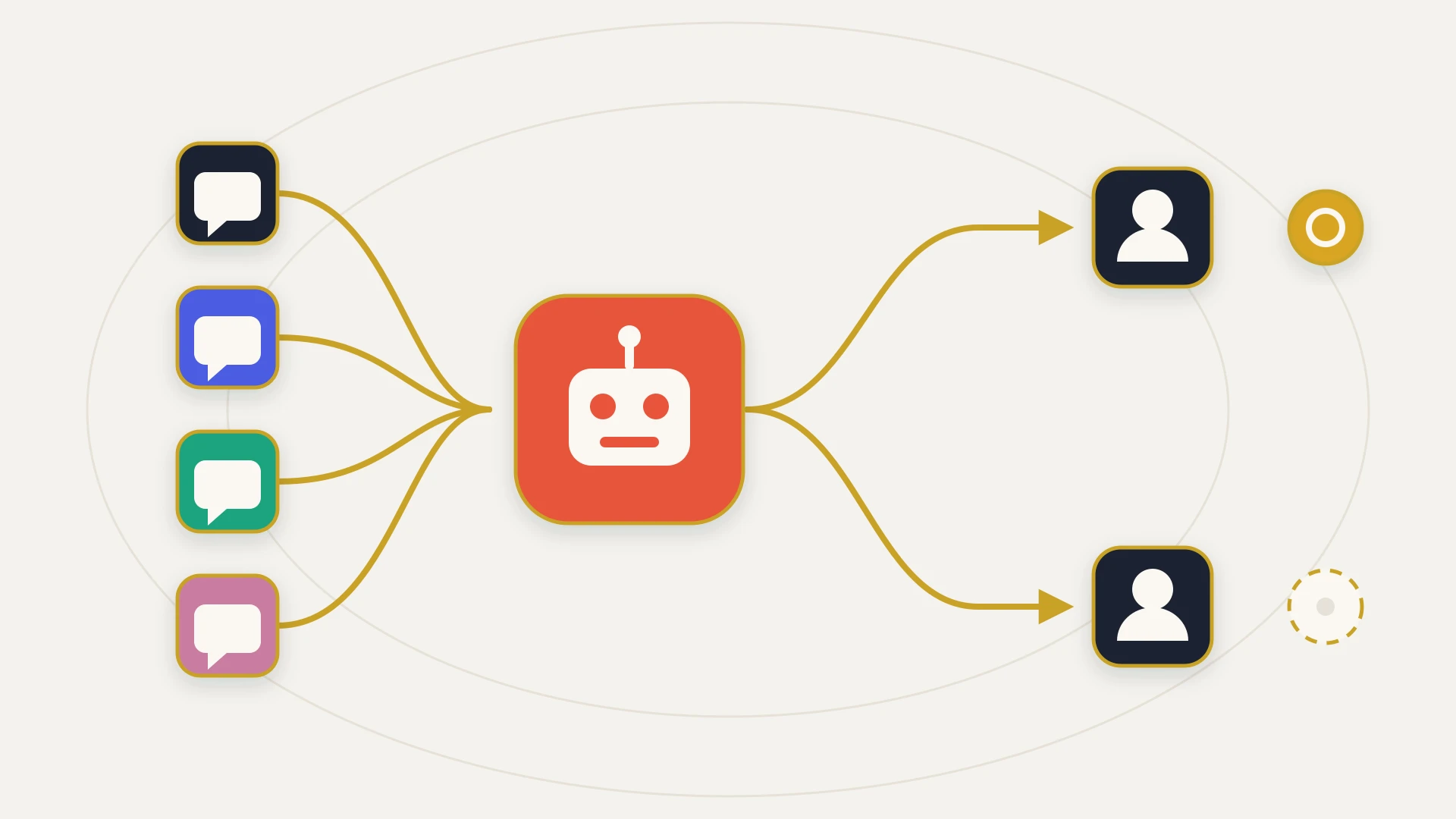
So what happens when the same human being exists in your help desk three times? A ticket from their work address, a chat from their personal address, a form submission that created a third contact because the email was typed differently. Three end users, as far as the platform is concerned. Three windows. Three sessions. Three charges for one person's bad afternoon.
On Zendesk the same fragmentation is a service quality problem and a reporting problem, which is bad, but it is not directly a billing problem, because the meter counts resolutions rather than people.
The fix is not exotic and it is not specific to either vendor. It is having one place that decides which records are the same person, and having the systems that create records consult it. We have written up the general shape of that in our customer 360 guide, and the only thing to add here is that on Freshdesk it has a direct financial return rather than only a reporting one.
Zendesk vs Freshdesk, Line by Line
| Zendesk | Freshdesk | |
|---|---|---|
| AI billing unit | Automated resolution | Freddy AI Agent session |
| Outcome required | Yes, resolved with no escalation to a human | No condition published |
| Verification | LLM verifies the resolution | None published |
| Unit scope | Per conversation resolved | Per end user, per window |
| Window | 72 hours on email, 2 hour default on messaging | 24 hours on chat, 72 hours from the first email |
| Published unit price | None, anywhere | $49 per 100 sessions |
| Included allowance | 5 / 10 / 15 per agent per month by plan | 500 sessions |
| Annual ceiling | 10,000 allocated automated resolutions | None published |
| Testing | Admin Center and sandbox excluded permanently | Previewing while building consumes sessions |
| Hard cost cap | Pause AI agent functionality at the limit | Sessions run out, conversations go to live agents |
| Agent copilot | Bundled in Enterprise + Copilot | $29 per agent per month, Pro and Enterprise |
| Occasional access | Light agents, free, 50 to 5,000 by plan | Day passes, $2 to $15, three free |
| API limit | 200 / 400 / 700 / 2,500 per minute by plan | 100 / 400 / 700 per minute, migration in progress |
| Documented sync constraint | Incremental exports at 10 per minute | Two documents, two regimes, batch rollout |
| Free tier API | Not applicable, no free tier | Zero calls permitted |
| HubSpot listing | One app, built by Zendesk, timeline activity | Three products across two marketplaces |
What Neither Price Covers
Three costs sit outside both pricing pages and land on whoever builds the integration.
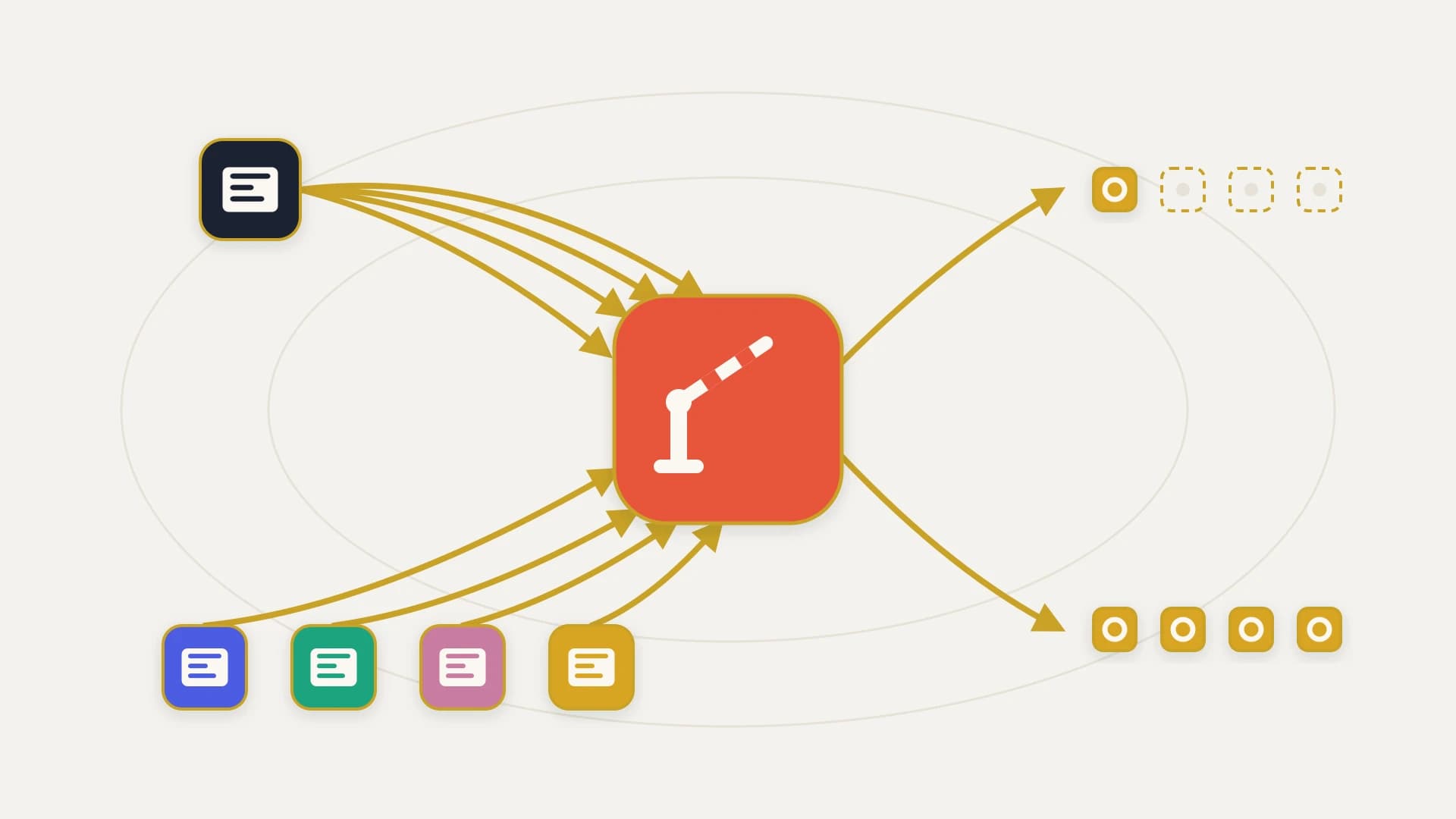
Deciding which conversations reach the AI agent at all. On Zendesk this protects your customers from a bot that cannot help them. On Freshdesk it also protects your budget, because every conversation routed to the agent is a session whether or not it was ever going to succeed. A ticket opened by a sync so that a record exists does not need an AI agent to look at it, and routing it away costs nothing to specify at design time.
Getting support state into the CRM as data rather than as activity. Covered above, and it is the same build on both platforms. It is also the one with the clearest return, because it is what turns support history into a renewal signal instead of something a rep has to read.
Keeping identity consistent across the systems that create records. On Freshdesk this is now a line item. On Zendesk it is a quality problem that becomes a reporting problem that eventually becomes a trust problem. Neither vendor can fix it for you, because the duplicates are not created in the help desk.
Is your help desk being fed duplicates?
If the same customer exists three times because a form, a sync and an import each created a record, you are paying for it in support quality on any platform and in sessions on Freshdesk. StackTie builds and maintains the integration layer that decides which record is the person before anything downstream sees it, for a fixed fee and a flat monthly retainer. Live in 14 days or you don't pay. The scoping call is free and ends in a written field map plus an honest read on what your help desk should own and what it should never have been asked to do.
Which One to Pick
Every figure you need is published: the seat price at every tier including enterprise, the session price, the allowance, the day pass rates. You can build the budget in a spreadsheet without a sales call, and if your AI agent turns out to be mediocre you will at least have predicted the cost of it being mediocre. Accept that the API documentation will not tell you which rate limit regime your account is on, and plan to find out by reading the headers.
If your product is complicated, your help content is thin, or your customers ask things no bot is going to answer, Zendesk's meter never charges you for that. You pay for the wins, the losses are free, testing is free permanently, and you can cap the whole line with the pause switch. The cost is that the per resolution rate is a negotiation rather than a number, and that incremental exports will shape your sync design whatever else you do.
If the queue is mostly filled by your own systems rather than by people, the platform is the second question. The first is how many distinct records those systems are creating, because on one of these two platforms that is priced per unit, and on both it is the difference between a support history and a pile of fragments. Fix the record creation, then choose.
Three questions settle it faster than any feature table.
What resolution rate do you honestly expect? Multiply it out against the break-even table above. If you expect a high rate, press hard on Zendesk's per resolution price, because you will be paying it often. If you expect a low one, Freshdesk is charging you for every disappointment.
Who needs to know the cost in advance? If the answer includes anyone in finance, Freshdesk publishes everything and Zendesk publishes an allowance and a ceiling. That is a real difference in how the procurement goes, independent of where the totals land.
How many records does one customer have? Ask it before you sign either contract. On Freshdesk it is a line item. On both it is the thing that decides whether support data is worth anything once it reaches the CRM.
The Bottom Line
Zendesk and Freshdesk have arrived at the same product and opposite meters. One of them charges you when its AI succeeds and verifies the success with a language model before billing it. The other charges for the interaction and says nothing about how it went.
That single difference reorganises the whole comparison, because it means the two platforms reward opposite things. The better your bot gets, the more Zendesk costs. The worse your bot is, the more Freshdesk costs for nothing in return. There is a price at which those two facts balance, it is $0.49 divided by your resolution rate, and only one of the two vendors will tell you their half of the equation.
Underneath the AI line the platforms are closer than their reputations suggest. The rate limits now sit almost on top of each other. Both HubSpot integrations stop at the timeline. Both leave the useful part, support state as data a workflow can act on, to whoever builds it. The seat gap is real but it is a third, not two thirds, once you compare the omnichannel products rather than the headline numbers.
So the decision is not really about features and it is barely about price. It is about which unknown you would rather carry: a rate you have to negotiate, or a meter that does not care whether it worked. And in both cases the volume flowing into that meter is set upstream, by the systems creating tickets and creating the contacts those tickets attach to, which is the one part of this nobody puts on the pricing page.
Before you compare the seat prices again, count how many records your busiest customer has. On one of these platforms that number has a price on it.